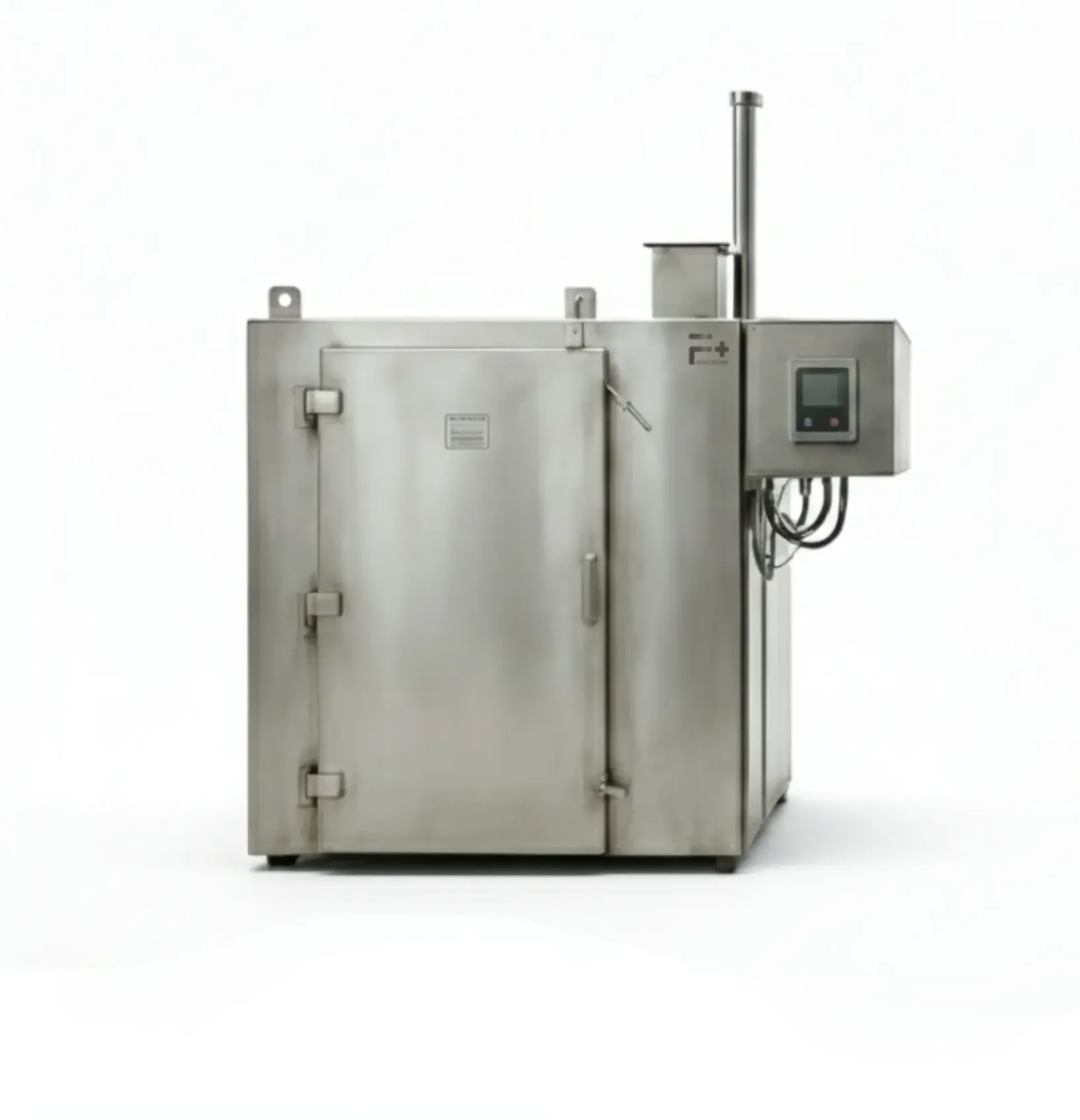

At F Plus, we design and manufacture pharmaceutical machinery , from high-shear granulators to rigid barrier isolators for pharmaceutical companies across Europe, Asia, and the Middle East. Over the past two years, we have seen a consistent shift in what procurement and engineering teams ask for. The questions have changed from ‘what does a granulation machine produce?’ to ‘how does this machine prove what it produced?’
This article is a systematic attempt to connect the dots between macro-level regulatory trends and the equipment decisions that manufacturing teams face today, with a specific focus on granulation and containment systems.
Regulatory frameworks covered in this article:
- ICH Q13 : Continuous Manufacturing
- OEB Framework: Occupational Exposure Bands
- Equipment as a data-generating compliance asset
- EU GMP Annex 11 and AI-specific requirements
- FRAME: FDA’s real-time manufacturing framework
- Global GMP harmonisation
ICH Q13 and What It Demands of Your Granulation Line
ICH Q13 is not a trend. It is a guideline formally adopted in 2023 that has now had over two years of real-world implementation across regulated markets.
Its global adoption has triggered a structural shift on the production floor. Pharma manufacturers are moving away from discrete batch processing and toward continuous granulation workflows, a transition that demands more than new hardware. ICH Q13 requires manufacturers to demonstrate full material traceability throughout the manufacturing process, meaning that every gram of input material must be tracked, logged, and attributable to a specific output.
For equipment procurement teams, this changes the selection criteria. The primary question is no longer about achieving a target particle size distribution with the right granulation machine. It is about documentation, control, and auditability over every stage of the process. ICH Q13 also requires compatibility with Process Analytical Technology (PAT) tools, which enable in-line measurement and real-time quality assessment during production.
In practical terms, a granulation line purchased today must demonstrate:
- RTD (Residence Time Distribution) characterisation for continuous processes
- Validated PAT integration with documented measurement methods
- Control strategies that can detect and respond to process disturbances in real time
- Transparent AI or model-based decision logic that can withstand regulatory scrutiny
- Attention to process containment to minimise cross-contamination risk
How the OEB Framework Is Reshaping Containment Equipment Selection
The Occupational Exposure Band (OEB) system has been an industry standard for over two decades. However, the regulatory environment around it has tightened considerably.
Two developments are driving this:
First, the revised EU GMP Annex 1 has redefined contamination control. It is no longer limited to sterility assurance. It now demands a holistic Contamination Control Strategy (CCS) that covers the entire manufacturing environment. Second, the high-potency active pharmaceutical ingredient (HPAPI) market is growing at approximately 9% CAGR, meaning that a larger proportion of compounds being manufactured today require the highest levels of containment.
For manufacturing teams processing HPAPIs, a properly specified containment system is not optional. Closed System Transfer Devices (CSTDs) now complement primary containment as a standard expectation, not an upgrade.
Granulation, which was historically a relatively open process, now increasingly requires fully integrated closed-loop architecture. Rigid barrier isolators fully enclosed granulation systems designed for blending, dispensing, and sampling operations provide operator protection through HEPA/ULPA air filtration, negative pressure environments, and integrated decontamination features.
In 2026, documentation requirements for containment systems extend well beyond the traditional OQ/PQ validation package. Regulators across Europe, the US, and Asia-Pacific now expect:
- Validated containment performance data, typically expressed as Surrogate Powder Testing using lactose or naproxen
- Documented CIP/WIP validation cycles
- Operator training records specific to containment breach protocols
- Environmental monitoring data for high-risk compound areas
Equipment as a Compliance Asset: The Data-Generation Imperative
One of the most underappreciated dimensions of current regulatory expectations is how thoroughly pharma manufacturing equipment is now expected to function as a data-generating compliance asset.
FDA guidance actively supports the use of real-time quality monitoring, PAT integration, and continuous manufacturing systems to improve operational efficiency and quality assurance. This has a direct implication for equipment specification: a granulation or containment equipment purchased today must be capable of logging process parameters continuously, and must be designed to integrate with MES (Manufacturing Execution Systems), QMS (Quality Management Systems), and LIMS (Laboratory Information Management Systems).
Data connectivity is no longer a premium feature. It is a baseline compliance requirement.
EU GMP Annex 11 and the Rise of AI in Manufacturing Equipment
EU GMP updates, including Annex 11 and emerging AI-specific regulatory annexes, now define explicit requirements for how artificial intelligence can be deployed in pharmaceutical manufacturing.
The most significant requirement is the ability to reconstruct all data processing activities. Any AI-powered decision made during manufacturing, for example, an automated endpoint determination in a high-shear granulator must produce traceable outputs, support validated AI/ML integrations, and present decision logic that is transparent enough to survive an inspector’s scrutiny.
This does not mean that AI cannot be used. It means that when AI is used, it must be treated with the same rigour as any other validated system. Version control, audit trails, and revalidation protocols upon model updates are all expected.
FRAME: The FDA’s Real-Time Manufacturing Signal
The FDA’s FRAME initiative communicates a clear message to the industry: modern drug factories must monitor quality in real time, use validated computer controls, and maintain a complete digital record of all manufacturing activities.
This is consistent with the broader industry shift toward continuous manufacturing. Pharma companies that have adopted automated visual inspection and real-time release testing are reporting meaningful reductions in quality-related rework, reflecting the operational efficiency that regulatory bodies have been encouraging. The direction of travel is clear: manual, periodic testing is being replaced by continuous, automated monitoring at the equipment level.
Global GMP Harmonisation: Engineering for Multiple Markets
Global GMP standards are converging, but they are also becoming stricter. For pharmaceutical machinery manufacturers, this creates a dual challenge: engineering pharmaceutical equipment that satisfies not just one regulatory body, but an entire ecosystem of overlapping standards across the FDA, EMA, and increasingly stringent Asia-Pacific regulators.
The practical implications for equipment procurement include:
- Documentation and validation packages must be structured to satisfy multi-region inspection requirements
- Material standards, surface finish specifications, and cleaning validation protocols must be globally acceptable
- Pharma equipment must be designed for adaptability as standards continue to evolve
Pharmaceutical Equipment as a Compliance Strategy
The industry-wide pivot is well established. In 2026, regulatory compliance is not a checklist you complete before a product launch. It is a system you build into your operations from the ground up and it starts with the equipment you select.
For buyers, this means the decision criteria have fundamentally changed. A containment or granulation equipment is no longer simply a production tool. It is a long-term compliance and scalability asset. The right system should support continuous validation, generate audit-ready data by default, and be designed to adapt as regulatory standards continue to evolve.
At F Plus Healthcare, this shift is built into the way our systems are designed. Our pharmaceutical equipment is engineered to meet multi-region compliance requirements, support PAT and MES integration, and provide the documentation infrastructure that modern regulators expect. Whether you are evaluating a new containment line for HPAPI processing or upgrading a granulation system to meet ICH Q13 requirements, we would be glad to discuss how our equipment can support your regulatory strategy.
Contact us: daanesh@fplushealthcare.com | WhatsApp: +91 75062 17809
Frequently Asked Questions
1. What is ICH Q13 and how does it affect granulation equipment?
ICH Q13 is a globally adopted guideline that facilitates the shift from batch to continuous manufacturing. For granulation, it requires full material traceability throughout the process, real-time monitoring, and PAT tool integration. This makes data control and auditability as important as the physical output of the machine.
2. How does the OEB framework influence containment equipment selection?
The OEB framework categorises the level of containment required based on the toxicity of the compound being processed. As HPAPI volumes increase and regulations tighten, manufacturers must invest in closed systems, rigid barrier isolators, and validated containment solutions to protect operators and satisfy compliance requirements.
3. Why is pharmaceutical equipment now expected to generate compliance data?
Regulators including the FDA emphasise real-time quality monitoring and digital traceability as foundational to modern manufacturing. Equipment must log process parameters continuously, integrate with MES, QMS, and LIMS platforms, and produce audit-ready records to support both routine compliance and regulatory inspections.
4. What do EU GMP updates mean for AI-enabled manufacturing equipment?
EU GMP Annex 11 and related guidance require that AI systems used in manufacturing be validated, version-controlled, and fully transparent in their decision logic. Equipment incorporating AI must allow complete reconstruction of all data processing activities, enabling regulators to audit how automated decisions were reached.
5. How has equipment procurement strategy changed in 2026?
Procurement has shifted from selecting production tools to investing in compliance-driven systems. Equipment must now support continuous validation, satisfy multi-region GMP requirements, enable real-time monitoring, and be designed for long-term scalability as regulatory standards continue to evolve globally.