
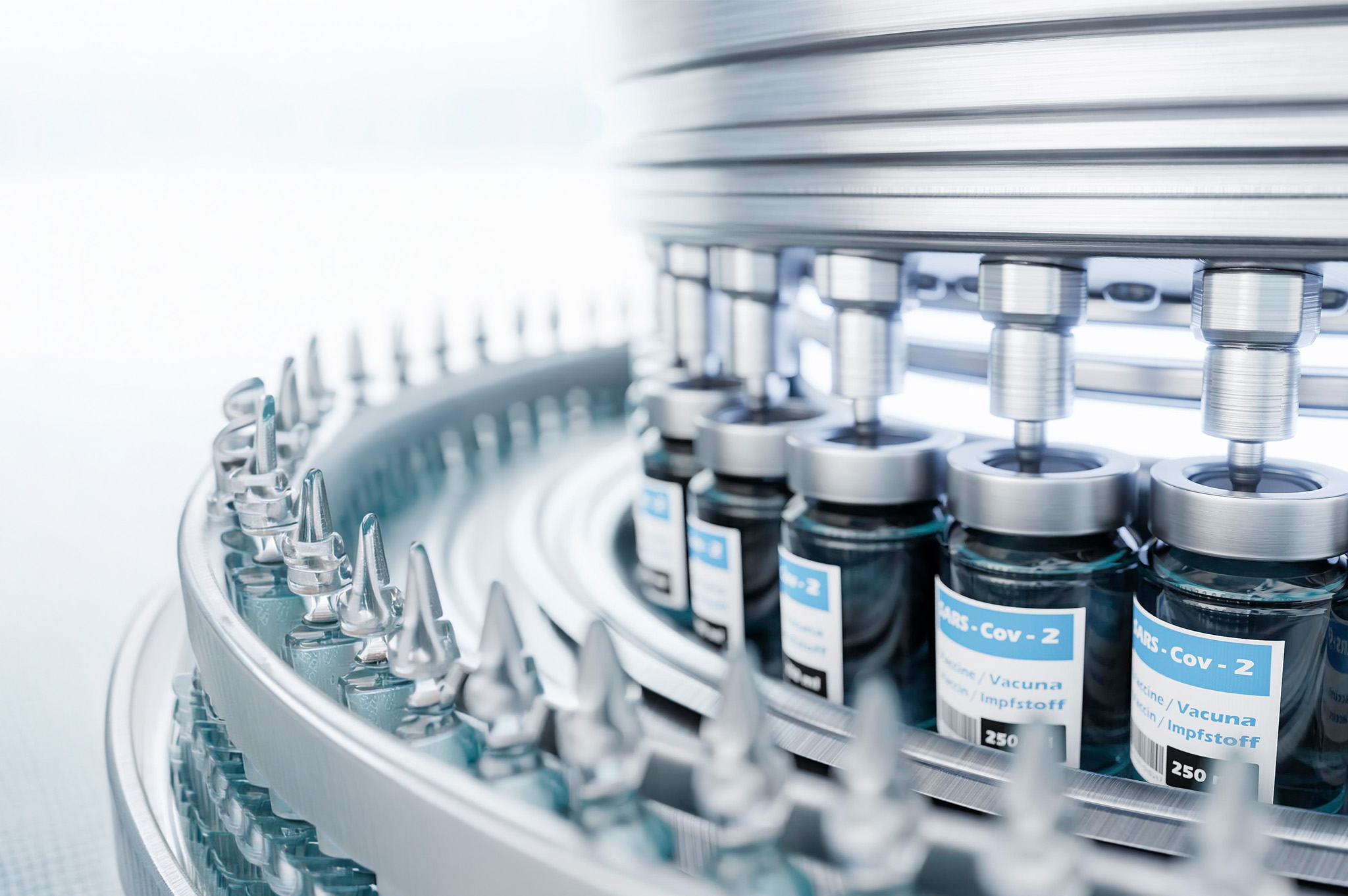
Ask most people to picture aseptic manufacturing, and they will describe the filler: needles dipping into vials, stoppers pressing home, everything moving at speed. It is the visible part of the line, so it collects the credit.
The filler, though, is just the last link in a long chain. A flawless machine on a weak line can still turn out a risky product. This blog follows a single vial through the systems around the filler, from the water that washes it to the barrier that protects it, to show where sterility is really won.
Why the Filler Alone Isn’t Enough
Contamination seldom enters at the needle. More often it arrives earlier, through poor water quality, particles on the glass, a small leak in a glove or a gap in the barrier.
Regulators have caught up with this. The revised EU GMP Annex 1 expects manufacturers to build a Contamination Control Strategy that treats the process as one connected system rather than a set of separate machines. Sterility has to be designed into the line. It cannot be added at the filling step, so the best place to begin is the space where the product lives.
The Isolator: Separating People from Product
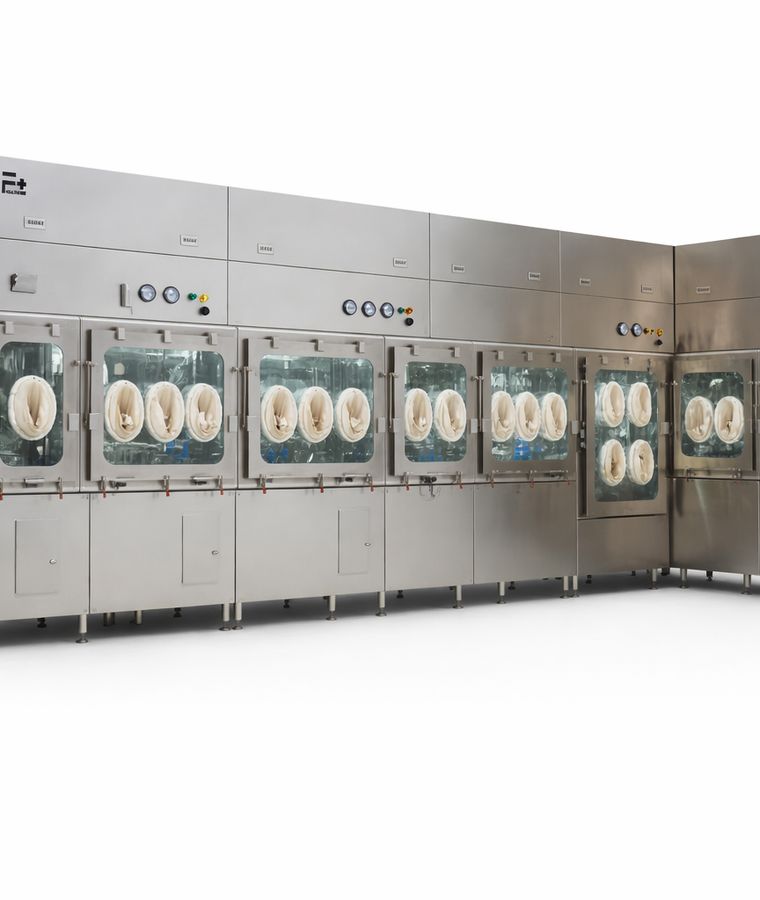
People are the biggest source of contamination in any cleanroom. An isolator in pharmaceutical settings addresses that directly. It places a sealed, controlled barrier around the filling zone, so operators work through ports rather than standing next to open product.
A well-designed isolator gives a filling line several things:
- A Grade A environment around critical operations
- Automated decontamination between batches, commonly with vaporised hydrogen peroxide
- Fewer operator interventions and less reliance on gowning
- A clear physical separation between the process and the room around it
Many teams weigh isolators against RABS (restricted access barrier systems). RABS can suit certain processes, but where the product demands a higher level of separation, the isolator is the stronger choice.
There is one catch. An isolator protects only as well as its barrier holds, and the weakest part of that barrier is the glove.
Glove Integrity Testing: A Small Check That Guards a Big Batch
Gloves and sleeves are flexed, stretched and handled all day. A pinhole can form without anyone noticing and still compromise sterility. This is why a glove integrity tester earns its place on the line.
Most testers find leaks using the pressure-decay method. Good practice usually includes the following:
- Test gloves before and after each batch, and at regular intervals in between
- Record every result so it can be traced during an audit.
- Replace gloves on a data-based schedule, not only after a failure.
- Treat a failed glove as a question mark over the batch it served
The test is quick and cheap. The batch it protects is neither. That difference in value is the whole case for testing every time.
WFI Generation: Purity Starts with Water
Water runs through the entire process. It goes into formulation, vial washing and the final rinse, so its quality shows up everywhere. A WFI generation system for pharmaceutical industry use supplies Water for Injection, which must meet strict limits for endotoxin and microbial quality.
Four areas need attention:
- Generation method: distillation is the long-established route, and some regions also accept membrane-based systems
- Storage and distribution: continuous circulation, temperature control and sanitary design keep biofilm from forming
- Monitoring: Regular sampling and online checks help ensure the water quality stays within the required limits.
- Documentation: Validation records confirm that the system is working as designed.
Clean water is only the starting point. The vial still needs to be sterilised and made pyrogen-free before filling.
The Vial Sterilisation Tunnel: Getting Glass Ready to Fill
Washed vials still need sterilisation and depyrogenation before they reach the filler. A vial sterilisation tunnel handles this on a moving conveyor, passing vials through heating and cooling zones under HEPA-filtered, unidirectional airflow.
The heating zone uses high-temperature dry heat to destroy contaminants and endotoxins. The cooling zone then brings the vials down to a safe temperature and delivers them to the filler under Grade A conditions. Continuity matters most here. The tunnel should connect smoothly to the washer upstream and the filler downstream, so sterile glass isn’t stretched or left exposed. Validation typically covers temperature distribution across the tunnel and endotoxin reduction studies.
When the Systems Work as One
Put these systems together, and each one has a clear role. WFI supplies the washer. The tunnel sterilises the vial. The isolator protects the filling process, while glove testing helps make sure that barrier stays intact.
A weakness in one link usually turns up as a problem somewhere else. A stable water system fixes issues before they reach the tunnel, and a sound barrier lets the filler work in the conditions it was designed for. Planning the line as one system costs far less than patching it later. A single, coordinated approach to design, qualification and documentation also closes the gaps that tend to open between separate suppliers.
Where F Plus Healthcare Fits
F Plus Healthcare works with pharmaceutical and biotech manufacturers on the equipment this blog covers. The company supplies systems from R&D-scale models to full production lines, so you can plan the equipment around your filler together instead of sourcing it piece by piece. You can explore its isolators, glove integrity testers, WFI generation systems and vial sterilisation tunnels to see how each one fits into a line.
Support goes beyond the equipment itself. F Plus Healthcare helps clients with project feasibility, basis-of-design consulting, technology transfer, regulatory support and commissioning. Having one team involved from the early design stage helps avoid the mismatches that tend to appear later, such as a tunnel that doesn’t line up with the filler, or a water loop sized for the wrong load. Each system can also be configured to your product, batch size, space and target markets, so the line fits your facility instead of the other way round.
Conclusion
The filler is important, but sterility depends on everything around it. Clean water, sterile glass, a sealed barrier and tested gloves all play a role in protecting the product before it reaches the needle. Reliable aseptic manufacturing comes from getting all these systems to work together.
Planning or upgrading an aseptic line? Talk to the experts at F Plus Healthcare about the systems around your filler. Contact us to discuss your requirements.
FAQs
1. What is aseptic fill-finish manufacturing and why does sterility depend on more than just the filler?
Aseptic fill-finish is the process of filling sterile drug products into containers such as vials under controlled conditions that prevent microbial contamination. While the filling machine is the most visible part of the line, sterility is determined by the entire upstream system: water quality, glass preparation, barrier integrity, and environmental controls. As outlined in EU GMP Annex 1, manufacturers are expected to implement a Contamination Control Strategy that treats the process as one connected system, not a series of isolated steps.
2. What is the role of an isolator in pharmaceutical aseptic manufacturing?
An isolator in pharmaceutical manufacturing creates a sealed, Grade A environment around the filling zone, physically separating operators from open product. This significantly reduces the risk of human-borne contamination. Isolators typically use automated vaporised hydrogen peroxide (VHP) decontamination between batches and require fewer gowning interventions compared to open cleanrooms or RABS. For high-risk or high sterility assurance applications, isolators are generally preferred over Restricted Access Barrier Systems (RABS).
3. Why is glove integrity testing critical in aseptic fill-finish operations?
Gloves and sleeves on an isolator are flexed and handled repeatedly during production, making them vulnerable to micropunctures and pinholes that are invisible to the naked eye. A glove integrity tester typically uses the pressure decay method to detect these leaks before or after a batch, protecting sterility assurance. Best practice includes testing before and after each batch, maintaining traceable records for audits, and replacing gloves on a data-driven schedule rather than waiting for a visible failure.
4. What is a WFI generation system and how does it support aseptic pharmaceutical production?
A WFI (Water for Injection) generation system produces highly purified water that meets strict pharmacopoeial limits for endotoxins and microbial count. WFI is used throughout the aseptic process in formulation, vial washing, and final rinsing, making its quality critical at every stage. Key considerations include the generation method (distillation or validated membrane-based systems), continuous-loop distribution to prevent biofilm formation, routine sampling, online monitoring, and thorough validation documentation.
5. What does a vial sterilisation tunnel do in an aseptic filling line?
A vial sterilisation tunnel sterilises and depyrogenates washed glass vials before they reach the filler. Vials travel on a conveyor through a high-temperature dry-heat zone, which destroys endotoxins and microbial contaminants, followed by a cooling zone that brings them to a safe temperature under HEPA-filtered, Grade A, unidirectional airflow. The tunnel connects the washer upstream and the filler downstream, ensuring sterile vials are never exposed to the ambient environment. Validation covers temperature distribution across the tunnel and verified endotoxin reduction levels.